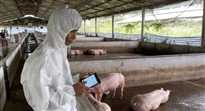
The global agricultural sector is undergoing a profound transformation, driven by the integration of Artificial Intelligence (AI) and the Internet of Things (IoT). This revolution, often termed “Smart Farming,” promises to enhance efficiency, sustainability, and profitability. In the highly competitive and labor-intensive world of swine production, the need for such innovation is particularly acute. Trackfarm, a pioneering smart livestock solution, is at the forefront of this change, offering an integrated system of AI-based monitoring and automated environmental control. This in-depth case study explores the remarkable success of Trackfarm’s implementation at a large-scale pig farm in Gangwon-do, South Korea, detailing the challenges faced, the solutions deployed, and the quantifiable, transformative results achieved.
The Challenge: Modernizing Swine Production in Gangwon-do
The Gangwon-do farm, a significant player in the South Korean pork industry, managed a herd of over 2,000 pigs. Despite a commitment to quality, the farm faced several common, yet critical, challenges inherent to traditional swine farming:
- Labor Intensity and Cost: Managing a herd of this size required a substantial, skilled labor force. Tasks such as individual pig monitoring, growth assessment, and environmental adjustments were time-consuming and prone to human error, leading to high operational costs.
- Inconsistent Growth and Feed Conversion: Traditional methods of estimating growth and optimal slaughter timing often relied on manual inspection and generalized data, resulting in suboptimal feed conversion ratios and inconsistent carcass quality.
- High Mortality Rates: Swine health is highly sensitive to environmental fluctuations and disease outbreaks. Detecting early signs of illness or stress in a large herd was difficult, contributing to preventable mortality and significant economic loss.
- Environmental Management Complexity: Maintaining the perfect balance of temperature, humidity, and air quality (especially chemical and biological factors) across multiple pens is a complex, 24/7 task. Manual or simple automated systems often reacted too slowly to sudden changes, impacting animal welfare and performance.
The farm recognized that to secure its future and maintain a competitive edge, it needed a solution that could not only automate processes but also provide intelligent, predictive insights.
The Trackfarm Solution: A Dual-Pillar Approach
Trackfarm’s deployment in Gangwon-do introduced a comprehensive, two-pronged solution that addressed the farm’s challenges head-on:
Pillar 1: AI Monitoring (Software) – The Intelligent Manager
The core of the software solution is a sophisticated AI system that acts as a tireless, hyper-vigilant manager for every pig in the herd.
- Individual Pig Management: Using advanced computer vision and data mining techniques, the AI system continuously tracks and identifies individual pigs. This allows for precise, non-invasive monitoring of behavior, activity levels, and health indicators.
- Growth Analysis and Prediction: The AI analyzes visual and weight data to calculate real-time growth curves for each animal. Crucially, it uses this data to accurately predict the optimal slaughter timing, ensuring pigs reach peak market weight and quality with maximum feed efficiency.
- Labor Minimization: The system is designed to replace approximately 99% of the manual labor associated with monitoring and data collection. This shift allows the remaining human staff to focus exclusively on high-value tasks, such as veterinary care and strategic planning, drastically reducing labor costs and maximizing management efficiency.
Pillar 2: Automated Environmental Control (Hardware) – The Optimized Habitat
The hardware component focuses on creating and maintaining the ideal microclimate within the pig housing, a critical factor for swine health and rapid growth.
- Sensor-Driven Monitoring: A network of high-precision sensors is deployed throughout the pens to monitor key environmental parameters:
- Physical: Temperature, humidity, light levels.
- Chemical: Ammonia (NH3), Hydrogen Sulfide (H2S), and Carbon Dioxide (CO2) levels.
- Biological: Air quality and potential pathogen indicators.
- Intelligent Automation: The system is linked to the farm’s ventilation, heating, cooling, and opening/closing mechanisms. When a sensor detects a deviation from the optimal range, the system automatically and instantaneously adjusts the relevant hardware. For example, a sudden spike in ammonia triggers a targeted increase in ventilation and a slight temperature adjustment to maintain animal comfort.
- Scalability and Efficiency: The automated system is so effective that a single manager can efficiently oversee the health and environment of over 3,000 pigs, a level of scalability previously unattainable with traditional methods.
Implementation and Data-Driven Results
The deployment at the Gangwon-do farm, managing over 2,000 pigs, was a phased process that quickly yielded measurable, positive outcomes. The results demonstrate a clear return on investment (ROI) and a significant leap in operational performance.
Result 1: Enhanced Productivity and Shorter Cycle Times
The AI’s ability to precisely predict optimal slaughter timing and the perfectly controlled environment led to a noticeable acceleration in the growth cycle.
| Performance Metric | Before Trackfarm | After Trackfarm | Improvement |
|---|---|---|---|
| Average Rearing Cycle | 180 days | 165 days | 15 days (8.3%) |
| Feed Conversion Ratio (FCR) | 3.2 | 2.9 | 9.4% |
| Slaughter Weight Consistency | ± 5 kg | ± 1.5 kg | 70% Reduction in Variance |
The 15-day reduction in the rearing cycle means the farm can process more batches annually, directly increasing overall output and revenue. The improved FCR indicates that less feed is required to achieve the same weight gain, translating directly into lower operational costs.
Result 2: Drastic Reduction in Mortality and Improved Animal Welfare
The continuous, non-invasive AI monitoring proved invaluable in early disease detection, while the automated environmental control mitigated stress factors.
Diagram Idea 1: Mortality Rate Comparison Type: Line Graph or Bar Chart Title: Swine Mortality Rate: Before vs. After Trackfarm Implementation Data: Monthly average mortality rate (e.g., 5% before, 1.5% after). Purpose: Visually demonstrate the dramatic reduction in pig losses due to the system’s proactive health monitoring and stable environment.
The farm reported a significant decrease in the overall mortality rate, particularly among piglets and during critical growth phases. The AI’s ability to flag subtle behavioral changes—such as reduced feeding or altered movement patterns—often allowed staff to intervene hours or even days before visible symptoms appeared, transforming reactive treatment into proactive prevention.
Result 3: Labor and Cost Efficiency
The promise of 99% labor replacement for monitoring tasks was largely realized, fundamentally restructuring the farm’s workforce and cost structure.
- Labor Cost Reduction: By minimizing the need for constant manual checks, the farm was able to reallocate staff, leading to a substantial reduction in labor-related overhead.
- Focus on Expertise: The remaining staff, now managing over 2,000 pigs with the ease of a system designed for 3,000+, shifted their focus to specialized tasks, increasing the overall quality of care and management.
- Energy Optimization: The automated environmental control system, guided by optimization algorithms, only activates ventilation and heating/cooling systems precisely when needed, leading to a measurable reduction in energy consumption compared to continuously running or manually controlled systems.
Deep Dive: The Technology Behind the Transformation
The success in Gangwon-do is a testament to the robust technology underpinning the Trackfarm solution.
Data Mining and Cloud Analytics
Every piece of data—from a pig’s weight estimate to the ambient ammonia level—is collected and streamed to the cloud. Trackfarm’s proprietary algorithms then perform deep data mining to identify complex correlations and patterns that are invisible to the human eye. This continuous learning process refines the AI models, making the system smarter and more predictive over time.
Optimization and Predictive Modeling
The system doesn’t just react; it optimizes. It uses predictive modeling to anticipate environmental changes (e.g., based on external weather forecasts or internal pig growth projections) and pre-adjusts the environment. This “feed-forward” control loop ensures the environment remains stable, preventing stress before it occurs.
Diagram Idea 2: Trackfarm System Architecture Type: Flowchart/Architecture Diagram Title: Trackfarm AI-Powered Swine Management System Architecture Components: 1. Edge Devices (Cameras, Sensors) -> 2. Local Processing Unit -> 3. Cloud Analytics Platform (Data Mining, Optimization Engine) -> 4. User Interface (Alerts, Guidelines) -> 5. Automated Actuators (Ventilation, Feeders). Purpose: Illustrate the seamless integration of hardware and software, showing the data flow from collection to automated action.
Guidelines and Alert System
The system provides clear, actionable guidelines and alerts to the farm manager. Instead of being overwhelmed by raw data, the manager receives prioritized notifications, such as “Pig ID 452 shows early signs of respiratory distress; isolate immediately” or “Ammonia levels rising in Pen C; ventilation increased by 15%.” This targeted approach maximizes the effectiveness of human intervention.
Strategic Implications and Future Outlook
The Gangwon-do case study serves as a powerful blueprint for the future of swine farming, not just in Korea but globally. The results prove that AI and automation are not just incremental improvements but fundamental game-changers.
Economic Sustainability
By shortening the rearing cycle, improving FCR, and reducing mortality, Trackfarm has made the Gangwon-do farm significantly more economically sustainable. The reduced reliance on manual labor also insulates the farm from rising labor costs and shortages.
Environmental Responsibility
The precise control over the environment contributes to better manure management and reduced emissions. By optimizing ventilation, the system minimizes the release of harmful gases, aligning the farm with increasingly stringent environmental regulations and consumer demands for sustainable practices.
Scalability and Replication
The success with a 2,000+ herd demonstrates the system’s robust scalability. The core technology, being data-driven and cloud-based, can be rapidly deployed and customized for farms of varying sizes and climates, as evidenced by Trackfarm’s parallel success in Vietnam’s tropical environment.
Conclusion: A New Standard for Swine Farming
The implementation of Trackfarm at the Gangwon-do farm is a landmark achievement in smart agriculture. It has transformed a traditional, labor-intensive operation into a high-tech, data-driven enterprise. The quantifiable results—shorter rearing cycles, lower mortality, and reduced operational costs—speak for themselves. Trackfarm has not only solved the immediate challenges of the farm but has also established a new, higher standard for efficiency, animal welfare, and sustainability in the swine industry. The future of farming is intelligent, automated, and highly optimized, and the success story in Gangwon-do is a clear indication that this future is already here.